Table Of Content
- Unveiling the Beauty of Silvered Glass: A Historic Technique with a Modern Twist
- Knife Design 101: What are Line and Flow?
- Heat Sources
- Gather the Following Materials
- Full tang
- Developing an Eye for Line and Flow
- What impact does knife handle design have on my product?
- Jay Fisher's Knife Patterns and Designs
You’ll have more than enough to get started if you have some of the things commonly found in a home shop, such as a bench grinder, drill press and a vise. An abrasive cutting wheel on a bench grinder or homemade grinder as shown in the photo will save a lot of time compared to cutting the steel with a hacksaw. The guard of the project knife is integral to the handle—the guard and handle are one piece—and this simplifies construction. I’ve offered hunting and utility knives without guards for 35 years. An attached guard has become an accepted design element of the modern hunting knife, and it serves as a safety feature, keeping a knife user’s fingers away from the edge.
Unveiling the Beauty of Silvered Glass: A Historic Technique with a Modern Twist
The Ultimate Guide to Knife Blade Shapes and Their Uses - Gear Patrol
The Ultimate Guide to Knife Blade Shapes and Their Uses.
Posted: Sun, 14 Apr 2024 07:00:00 GMT [source]
The 2 main types of knife tang can run about halfway through the knife handle (partial tang) OR can go the whole length of the knife handle (full tang). Common natural materials used for knife handles include bone; wood; or the shell, teeth or tusks of some animals. As the title says, it is time to make the hunk of metal look somewhat kinda not really barely like something that might possibly resemble a bushcraft knife. I don't worry about getting it perfect, as I always find it easiest to grind it down with my bench grinder. So, just knock off the parts that are too difficult to do with the bench grinder.
Knife Design 101: What are Line and Flow?
Symmetry in design and nature creates balance and harmony, drawing attention and triggering intuitive excitement. Since the Renaissance, many artists, and architects have proportioned their creations to approximate the golden ratio. The ratio itself has been known by many names, including the Phi Ratio, the Fibonacci Ratio, the Divine Ratio, the Golden Mean, and the Golden Section. The design principles you learned will guide you in creating visual media. An efficient design will guide the viewer to see what you intend for them to look in the way you intended for them to see it.
Heat Sources

I have summarized many of these issues in an article called What a Good Heat Treatment Can and Cannot Do. That article introduces heat treatment and links to the many other articles I have written about the individual elements of heat treatment and the mechanisms by which heat treatment occurs. I also have articles about optimizing the heat treatment of a few different steels such as AEB-L, A2, 52100, Z-Wear/CPM CruWear, CruForgeV, and 5160. If knives are used only for fine slicing tasks a chipped edge is highly unlikely. I have an article on the microstructure mechanisms that occur during chipping of edges.
The design for the project knife is practical and simple from a construction standpoint. History is on our side because it was simple working knives that got meat from the hoof and into the kettle. And, there were all the other cutting chores required for those living close to the land. A fancy design or beautiful finish wasn’t required; all that was necessary was a sharp blade with a good handle to grip.

Serrated blades are more difficult to sharpen than smoothblades, but they stay sharper longer because there is less contact area. Theycut faster than smooth edges, but the cut is not as clean or precise. There are many different types of knives on the market for almost any need. From hunting to preparing food to ceremonial purposes, you can find a knife or other blade to suit your needs. Making a knife handle is an intriguing and captivating process.
Developing an Eye for Line and Flow
Undoubtedly, the quality of craftsmanship, elegance, or perfection of shape, and the superb cutting characteristics of a knife blade play a primary role in choosing this tool. However, the quality of materials, comfort, and functional advantages of its handle are equally important. For exclusive knives, the defining factor is the flawless execution of lines and a thoughtful selection of valuable rare materials. Therefore, a beautifully designed handle is a more critical part of such a knife than its cutting characteristics.
Handles may be adapted to accommodate the needs of people with disabilities. For example, knife handles may be made thicker or with more cushioning for people with arthritis in their hands. A non-slip handle accommodates people with palmar hyperhidrosis. Knife handles can have different tactile surfaces – smooth, rough, finely ribbed, depending on the material used in their production. However, the most crucial requirement for choosing a knife handle remains its comfortable fit in the hand for easy, precise tasks.
This building wants to be the Swiss army knife of urban living - Fast Company
This building wants to be the Swiss army knife of urban living.
Posted: Mon, 15 Apr 2024 07:00:00 GMT [source]
Jay Fisher's Knife Patterns and Designs
I prefer the fresh air of my smithy, which isn’t much more than a lean-to hooked onto the back of my shop. I love to retreat to the smithy, fire up the forge, get some steel hot and start swinging the hammer. This gets the juices flowing and I get the energy to work another hour or two. That energy thing is hard to explain; it must be experienced.
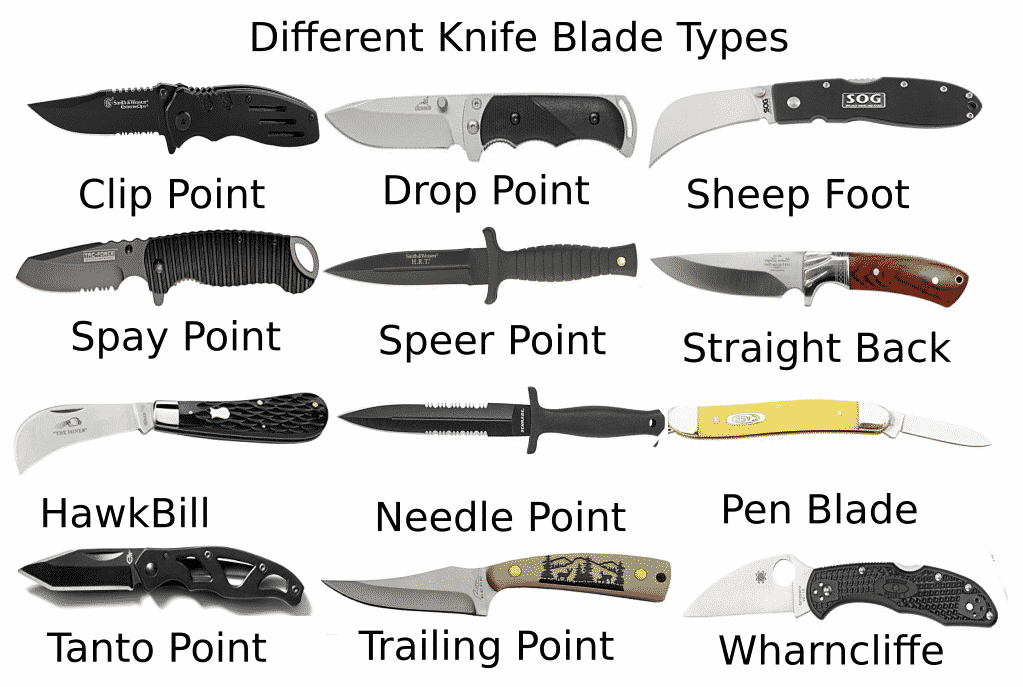
The talon knife blade shape is very similar to the hawkbill knife blade. However, instead of a square-looking back that curves down steeply at the end, the curve is more gradual, giving the blade a shorter, talon-like appearance (hence the name). It is used in much the same manner as a hawkbill blade, by pulling the blade back for cutting materials such as carpet and linoleum. The sharp point is good for piercing, the sharp edge cuts efficiently, and the dull back protects your fingers from cuts when applying pressure. The drop point knife blade shape features a slight curve and a convex curve on the back of the knife. It is used for most pocketknives since the shape of the blade can be applied to many different applications.
Stock removal blades are shaped by grinding and removing metal. With both methods, after shaping, the steel must be heat treated. This involves heating the steel above its critical point, then quenching the blade to harden it. After hardening, the blade is tempered to remove stresses and make the blade tougher.
Blunt tip blades are also specialty blades, used especially for dive knives. The pen knife blade shape features a symmetrical curve on both sides of a center spine, similar to a spear point blade. However, unlike a spear point, it’s only sharpened on one side. A Swiss Army knife is the most popular example of a pen knife.
This approach not only ensures visual continuity at the dining table but also celebrates the idea of design as an integral part of everyday life. Japanese kitchen knives seem mysterious and exotic to many people. In this spirit we are pleased to host a library of our own knife designs and templates, free for anyone to learn from and use. Normally used by hunters and fishermen, gut hook blades have a hook on the spine for dressing game and cutting fish. They also have a large belly that is perfect for any necessary skinning or slicing, making it an ideal outdoors knife.
Some of the simplest of things common in everyday life are there for our benefit if we would notice. I used an imported version of the Black & Decker Work Mate while making the project knife. It was still not real solid so I made a shelf to sit on the cross supports for the legs, and I put a lot of heavy stuff on it. If a work table wiggles too much when draw-filing or hand sanding, just back it up into a corner of the room so it can’t get away. It will be all right to use more advanced tools if you have them.


No comments:
Post a Comment